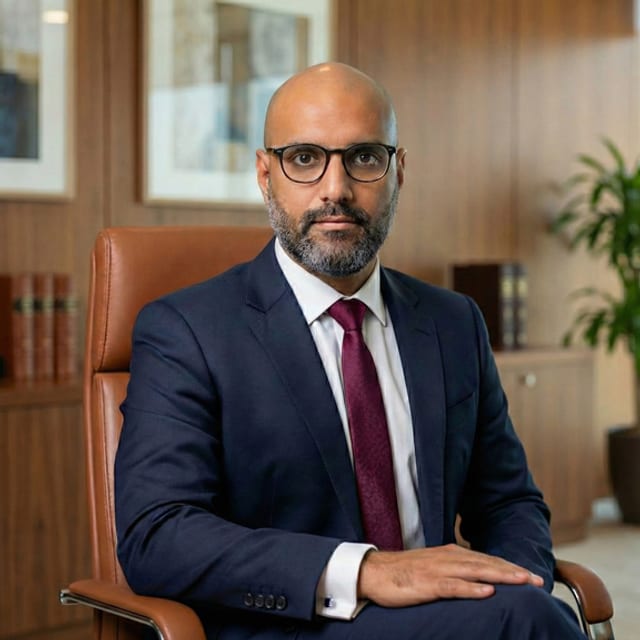
Two founding partners and no account layer: the person who scopes your engagement is the person accountable for delivering it.
Syed Kamal Wasti
Founding Partner
Wasti works with owners and executives on the commercial side of technology: where AI and platforms create margin, which investments pay back, and how to scale operations without scaling headcount. A career spent building and running technology businesses in the Gulf informs a simple rule: a system is only finished when it changes a business number. At Caltor, Wasti leads the firm's largest client relationships and keeps every engagement anchored to the outcome it was bought for.
Usman Mustafa
Founding Partner
Mustafa helps leadership teams turn AI ambition into governed, revenue-bearing operations. The practice rests on one conviction: AI only creates value when the business can trust it, so every system arrives with security architecture, auditability and clear ownership built in. Mustafa advises boards and executive teams on where AI belongs in the operating model, what it should never touch, and how to expand its use without creating tomorrow's breach.
The firm the two of us are building
What we are building
Caltor exists to be the firm a business calls when the system matters and the answer has to be right. Not a strategy house that hands its thinking to someone else to execute, and not a supplier of engineers to fill a gap on someone else's plan. The ambition is narrower and harder than either: to be the small number of people an organization trusts with the systems it cannot afford to get wrong, and to leave that organization more capable than we found it. Most of how the firm is organized follows from that, including the work we turn down.
How we intend to get there
The strategy is depth rather than breadth. We would rather be genuinely useful in a few sectors than plausible in twenty, so we work where regulation, integration and real consequences make the engineering hard, and we say no when a problem sits outside that. We grow by earning the next system from the last one rather than by hiring ahead of demand and then finding work to fill the seats. Evidence matters more to us than presence: the systems the two of us have built and run are the argument, and we would rather be judged on those.
The culture we protect
The two of us are inside the work our names are on, and we hire people senior enough that a client's architecture is safe in their hands. Nobody is assigned to an engagement because they happened to be free, and nobody junior learns on a client's system. We say the uncomfortable thing early: that a request will not do what someone hopes it will, that a commitment cannot be met, that a problem is not ours to take. Clients tend to find that easier to work with than the alternative, and so do we.